comparing digital and analogue callipers for precision needs
When it comes to precision measurement in fields such as engineering, woodworking, and metalworking, callipers are indispensable tools. With advancements in technology, digital callipers have gained popularity, but analogue callipers still hold their ground for various applications. This article provides an in-depth comparison of digital and analogue callipers to help you decide which is best suited for your precision needs in 2026.
Understanding callipers
Callipers are versatile measuring instruments that come in two primary types: digital and analogue. Both types are designed to measure internal and external dimensions as well as depths, making them essential for tasks that require accuracy. The choice between the two often hinges on personal preference, specific application requirements, and the level of precision needed.
Digital callipers: the modern choice
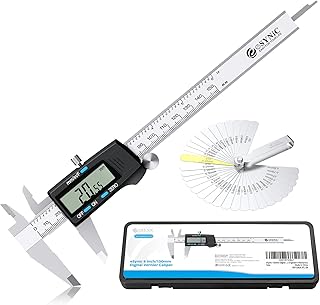
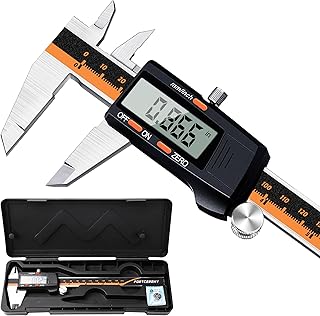
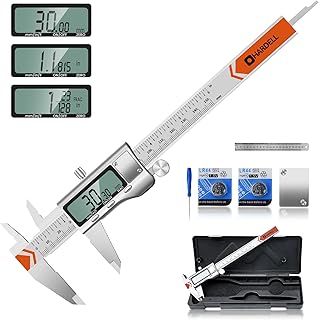
Digital callipers are equipped with an electronic display that provides readings in numerical form. This feature allows for quick and easy interpretation of measurements. One of the key advantages of digital callipers is their ability to switch between measurement units, usually offering both metric and imperial readings. This flexibility can be particularly useful for professionals working in environments where both systems are used.
Another significant benefit of digital callipers is their enhanced accuracy. High-quality models can provide measurements with an accuracy of ±0.01 mm, making them ideal for precision tasks. Furthermore, many digital callipers come with additional features such as absolute and relative measurement modes, which can streamline the measuring process for various applications.
People Also Look For:
- Starrett Fractional Display Digital Vernier Caliper 150mm
- Spurtar Vernier Caliper Gauge 0-150mm 0-6" Precision Calipers Measuring Tool Accuracy 0.02mm/0.001" for DIY/Household/Industrial U...
- Vernier gauge calipers measuring tool 150MM 6†Stainless Steel Micrometer Vernier callipers measuring tool Vernier calipers ...
- 150mm 6inch Plastic Digital Caliper LCD Digital Electronic Ruler Carbon Fiber Vernier Caliper Gauge Micrometer Measuring Tool
- Vodlbov Digital Vernier Caliper 0-150mm / 0-6’’ Electronic Digital Caliper with Extra-Large LCD Screen,Plastic Carbo...
Analogue callipers: the traditional tool
Analogue callipers, often referred to as vernier callipers, utilise a sliding scale and a fixed scale to provide measurements. Users read the measurement from the engraved markings on the scale. While they may require more skill to interpret compared to digital models, they are valued for their durability and simplicity.
Analogue callipers do not rely on batteries, making them a reliable choice for environments where power sources are limited. They are also typically more affordable than their digital counterparts, making them a great option for hobbyists or those just starting in precision measurement.
Precision and accuracy
Precision is paramount in any measurement job. Digital callipers often outperform analogue models in terms of accuracy, especially for complex measurements where decimal readings are essential. However, skilled users can achieve remarkably accurate results with analogue callipers, particularly in hands-on environments where tactile feedback is beneficial.
For applications requiring repeated measurements, digital callipers can be more convenient. The instantaneous display eliminates the risk of misreading the scales, which can sometimes occur with analogue models. However, those who are comfortable with analogue callipers may find that their experience allows for equally precise results.
Ease of use and maintenance
Digital callipers are generally considered easier to use, especially for beginners. The clear numerical display allows users to focus on the measurement rather than interpreting scales. Maintenance is straightforward, often requiring only a periodic battery replacement and careful storage to prevent damage.
On the other hand, analogue callipers require a bit more understanding of how to read the scale accurately. This can make them challenging for novices but rewarding for those who enjoy mastering traditional tools. Maintenance involves keeping the callipers clean and ensuring that they are properly calibrated, which can extend their lifespan significantly.
Choosing the right calliper
Your choice between digital and analogue callipers should depend on your specific needs. If you require high accuracy, ease of use, and versatility, digital callipers may be the way to go. Conversely, if you prefer a durable, battery-free option that offers a tactile experience, analogue callipers could serve you well. Consider your work environment, the types of measurements you frequently perform, and your level of comfort with each type to make an informed decision.